Managing user licenses
The UMP License page shows how many licenses the customer is currently using (Currently Licensed), compared with the number of licenses that the customer purchased (Acquired Licenses). Billing is based on the Currently Licensed value.
License usage is calculated from license factors. Each factor counts a different type of managed user or number. To prevent double counting, a user who qualifies for more than one factor is counted only once, under the factor with the highest priority. The factors, from highest to lowest priority, are described below and in the table and example that follow.
Managed Users-Direct Routing has the highest priority, because it covers the core of the Direct Routing service: users who make and receive calls through the Direct Routing infrastructure. These users consume telephony resources and have the highest operating cost. The other factors cover administrative or supporting actions, and therefore have a lower priority:
| ■ | Managed Users-By LifeCycle Management: Users who are managed automatically by LifeCycle Management templates (M365 configuration templates, including number ranges) that are assigned to security groups in the customer tenant. |
| ■ | Managed Users-By User Interface: Users whose M365 properties were changed manually in the Service portal, for example, Teams policies, personal details, or phone number assignment or removal. |
| ■ | Managed Service Numbers: Numbers that are loaded to the tenant but are not assigned to users, such as fax, auto attendant or emergency numbers. Only numbers whose dial plan tag is different from the dial plan tag of the configured SIP Connections are counted. |
The license factor priority order is as follows:
| 1. | Managed Users-Direct Routing |
| 2. | Managed Users-By LifeCycle Management1 |
| 3. | Managed Users-By User Interface2 |
| 4. | Managed Service Numbers3 |
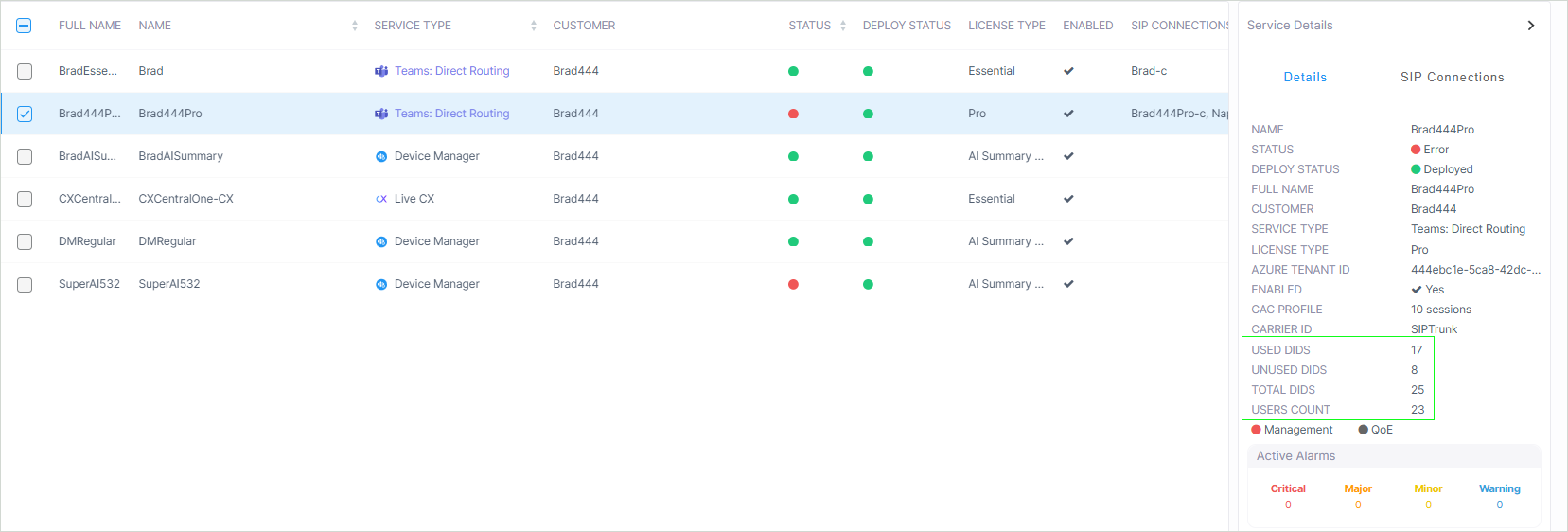
The Acquired Licenses value is the number of licenses that the customer purchased, as configured in the Onboarding wizard. In the Live Platform portal, this value is reported to OVOC as Ordered Users in the Service Details.
The Currently Licensed value is the total of all the license factors that are included in the calculation. In the Live Platform portal, this value is reported to OVOC as Users Count in the Service Details.
| ➢ | To manage user licenses: |
| 1. | In the Service portal Navigation pane, select Monitoring > UMP License. |
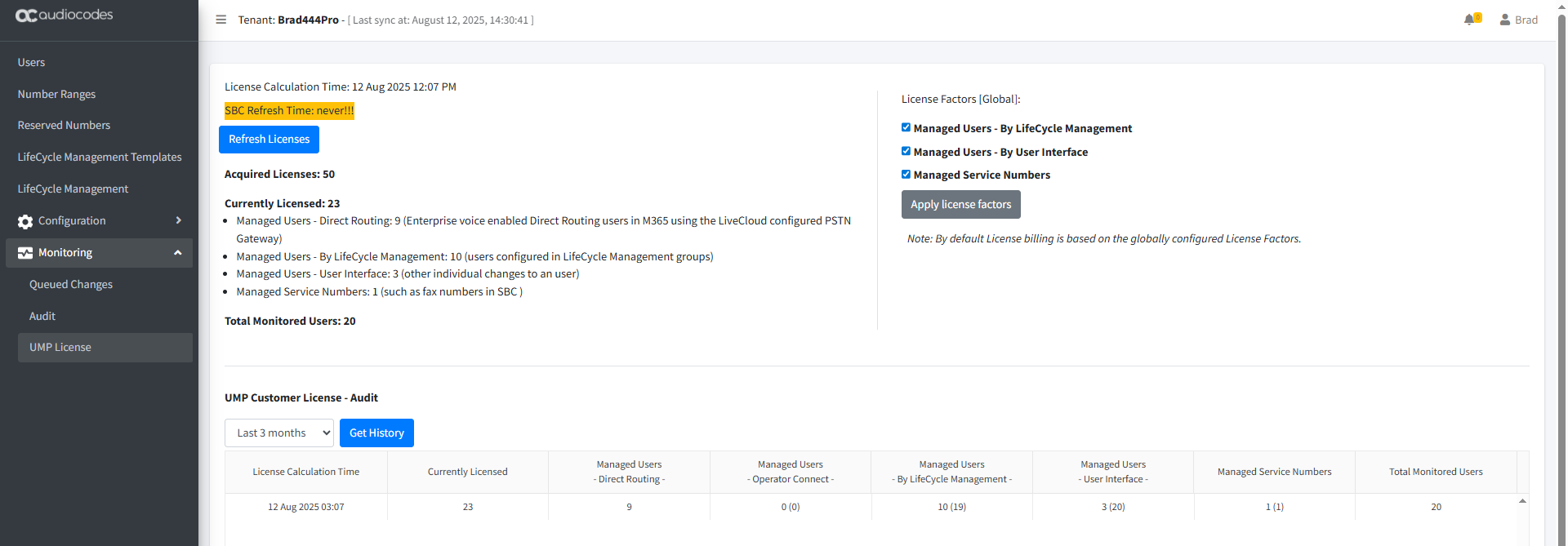
| 2. | Refer to the table below for descriptions of the parameters displayed in this page. |
|
License Factor |
Description |
Priority |
|||||||||
|---|---|---|---|---|---|---|---|---|---|---|---|
|
Acquired Licenses |
The number of licenses that the customer purchased, as configured in the Onboarding wizard. |
- |
|||||||||
|
|
|
|
|||||||||
|
Currently Licensed |
The total number of licenses in use: the sum of the license factors below that are included in the calculation. |
- |
|||||||||
|
Managed Users-Direct Routing |
The number of users who meet all the following conditions:
These users are counted whether they were configured automatically by LifeCycle Management templates or manually. |
1 |
|||||||||
|
*Managed Users-By LifeCycle Management |
The number of users who are members of a security group that is assigned to a LifeCycle Management template, and who are not already counted under the Managed Users-Direct Routing factor (that is, they do not meet all its conditions). |
2 |
|||||||||
|
*Managed Users-By User Interface |
The number of users whose M365 properties were changed manually in the Service portal, and who:
|
3 |
|||||||||
|
*Managed Service Numbers |
The number of phone numbers that are loaded to the tenant in the Manage SBC Prefixes page but are not assigned to individual users, and whose dial plan tag is different from the dial plan tag of the configured SIP Connections (see Load DIDs to managed service). These are typically service numbers, such as fax, IVR or emergency numbers. |
4 |
|||||||||
|
Other |
|||||||||||
|
Total Monitored Users |
The total number of users in the customer M365 tenant that are synchronized with Live Platform. The customer is only billed for licensed users and not for monitored users. |
|
|||||||||
|
|
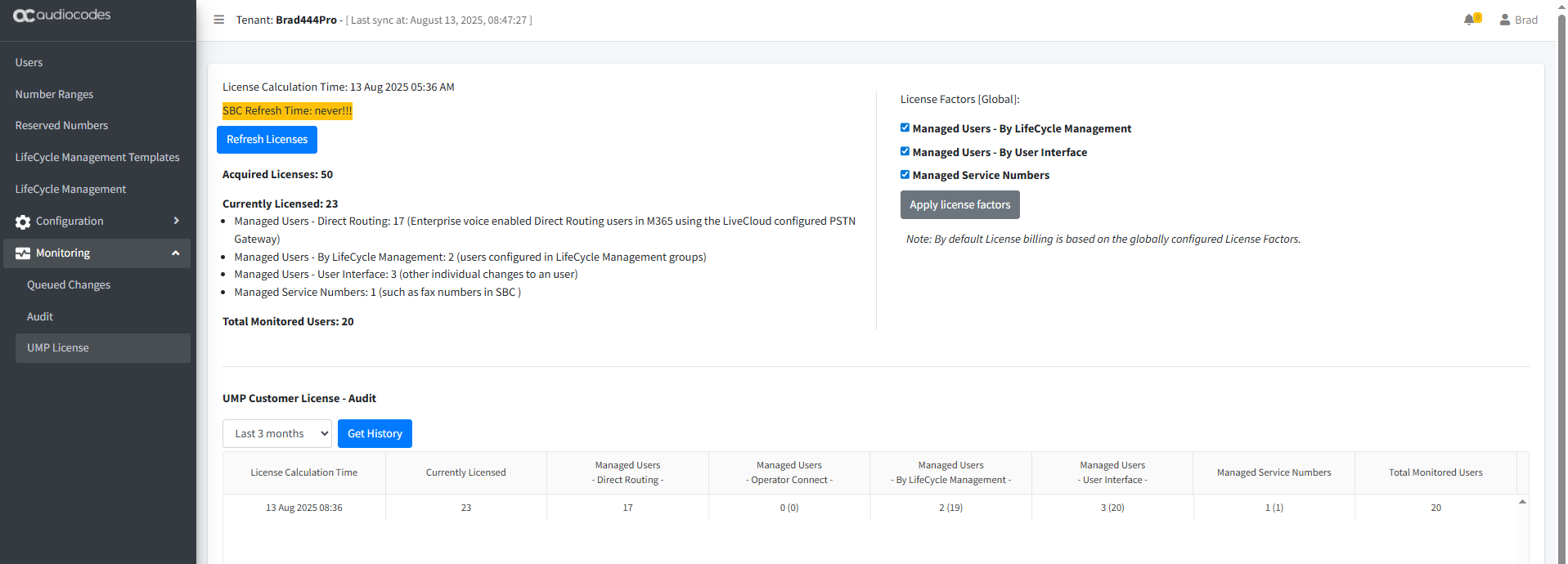
Click Refresh Licenses to recalculate the license usage. Do this after any configuration change that affects a license factor, or after you click Apply license factors (see below). The page shows when the license was last calculated (License Calculation Time) and when the number data was last read from the SBC (SBC Refresh Time). The SBC Refresh Time is highlighted if it is more than two hours older than the License Calculation Time. If no license data exists yet, the message "License data is missing. Please Refresh Licenses!" is displayed. |
|
|||||||||
|
|
Click this button to apply the license factor settings that the System Administrator configured, either globally or for this service, for the following factors:
The license factors are recalculated. Click Refresh Licenses to display the updated values. |
|
|||||||||
|
UMP Customer License-Audit pane |
|
|
|||||||||

In the example shown in the figure above, an enterprise has purchased 50 licenses. The license usage has the following composition:
| ■ | 23 licenses in use (Currently Licensed), made up of the following factors: |
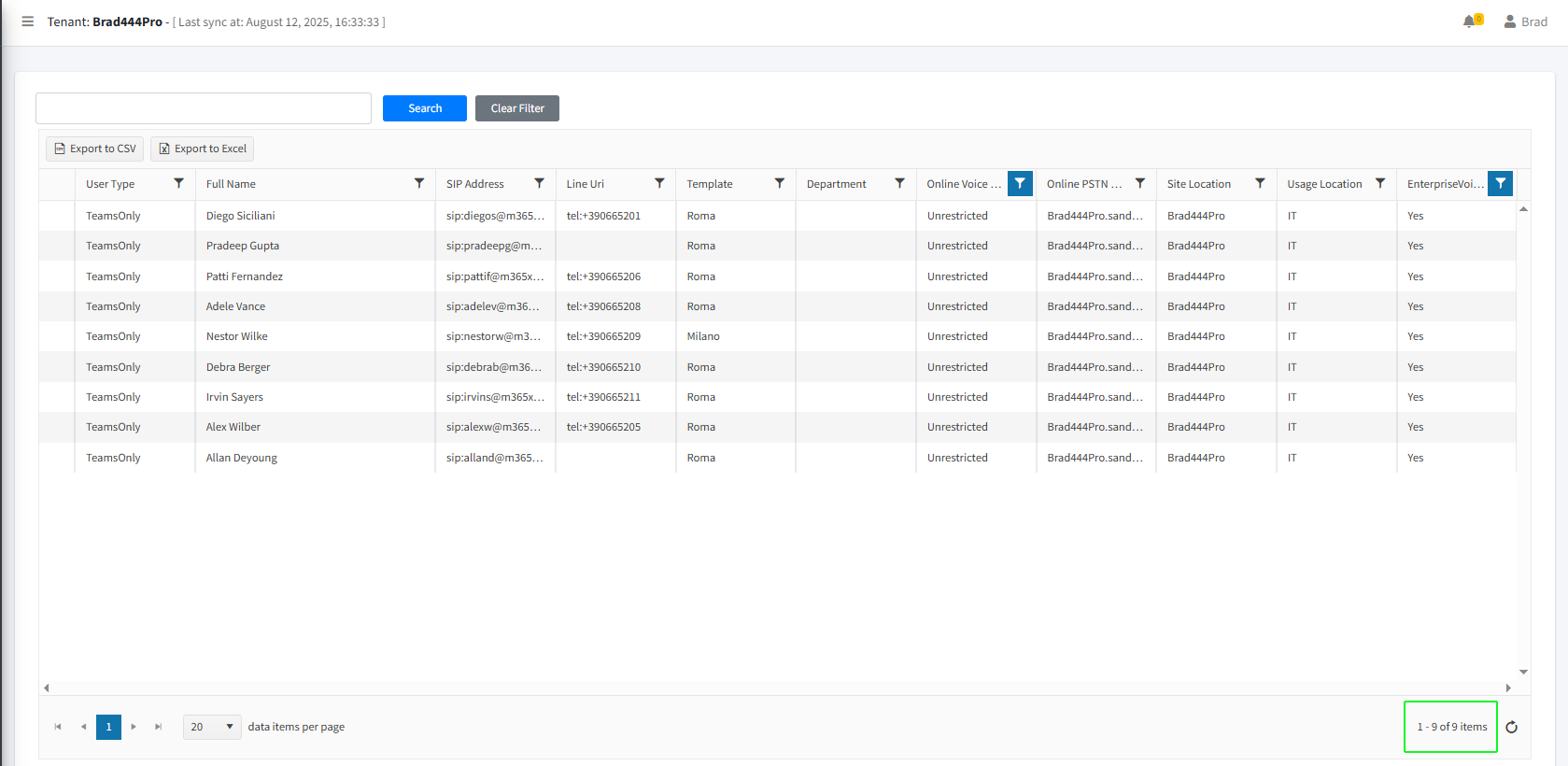
| ■ | 9 users counted as Managed Users-Direct Routing. These users are assigned the Online PSTN Gateway 'Brad444Pro.sandbox3.audiocodes.be' (which matches the configured SIP Connection) and the Online Voice Routing Policy 'Unrestricted', and Enterprise Voice is enabled, as shown in the figure below. |
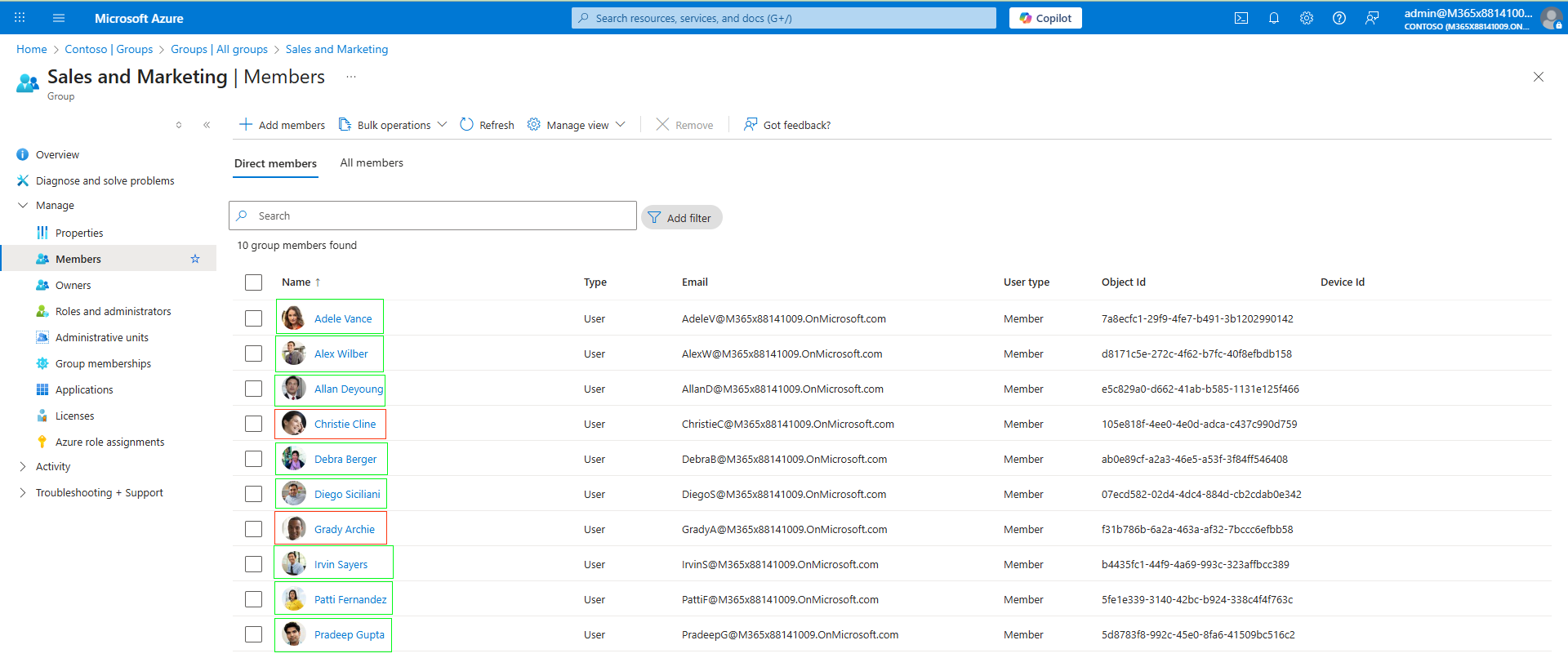
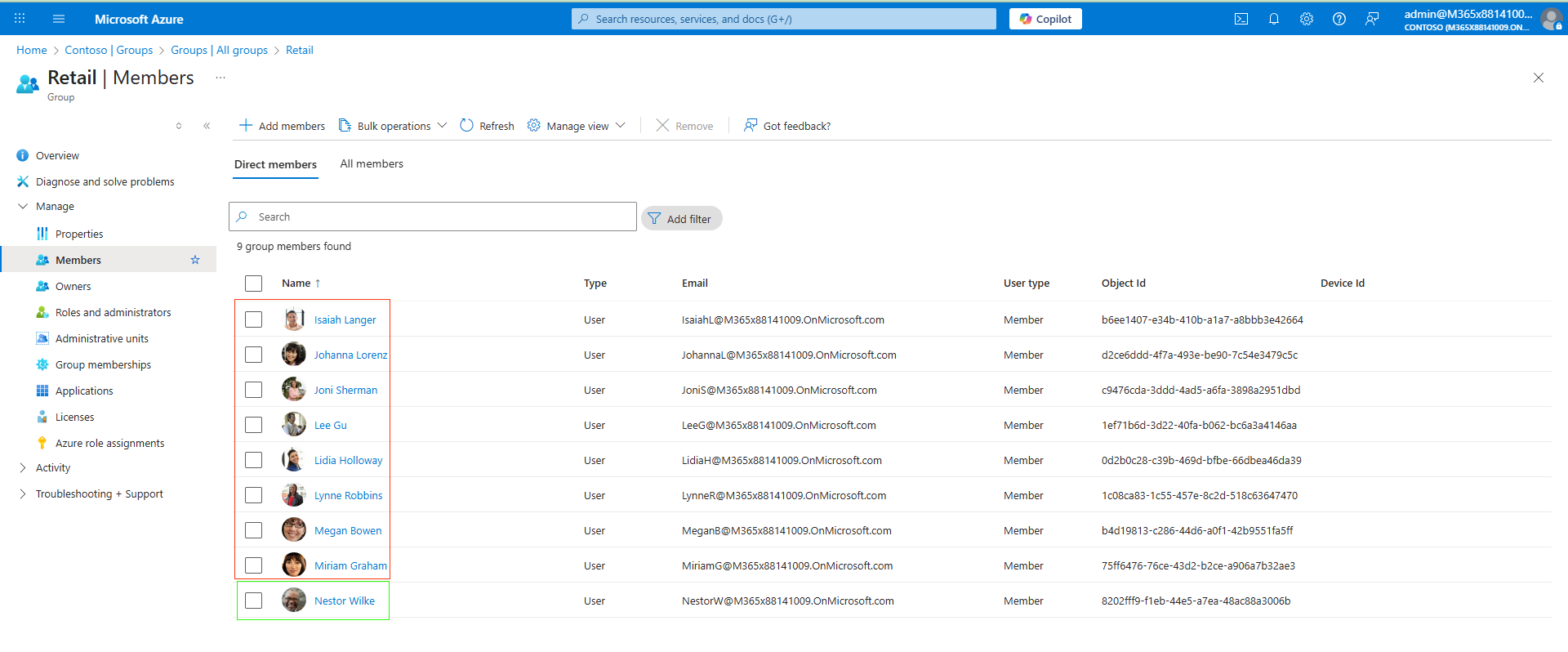
| ■ | 10 users counted as Managed Users-By LifeCycle Management. These users are members of security groups that are assigned to LifeCycle Management templates, but they do not meet all the Direct Routing conditions. The figures below show two security groups in the customer tenant: Sales and Marketing (assigned to the Roma template) and Retail (assigned to the Milano template). Sales and Marketing has 10 members, of whom 8 are already counted as Managed Users-Direct Routing (highlighted) and 2 are not (highlighted). Retail has 9 members, of whom 1 is already counted as Managed Users-Direct Routing and 8 are not. In the UMP Customer License - Audit pane, this factor is displayed as 10 (19): 19 users qualify for the factor (all the members of the two security groups), and 10 of them are counted under it, because the other 9 are already counted as Managed Users-Direct Routing. |
|
LifeCycle Management Template |
Security Group |
Managed Users-Direct Routing Factor |
LifeCycle Management Factor |
Total |
|---|---|---|---|---|
|
Roma |
Sales and Marketing |
8 |
2 |
10 |
|
Milano |
Retail |
1 |
8 |
9 |
|
Total |
|
9 |
10 |
19 |
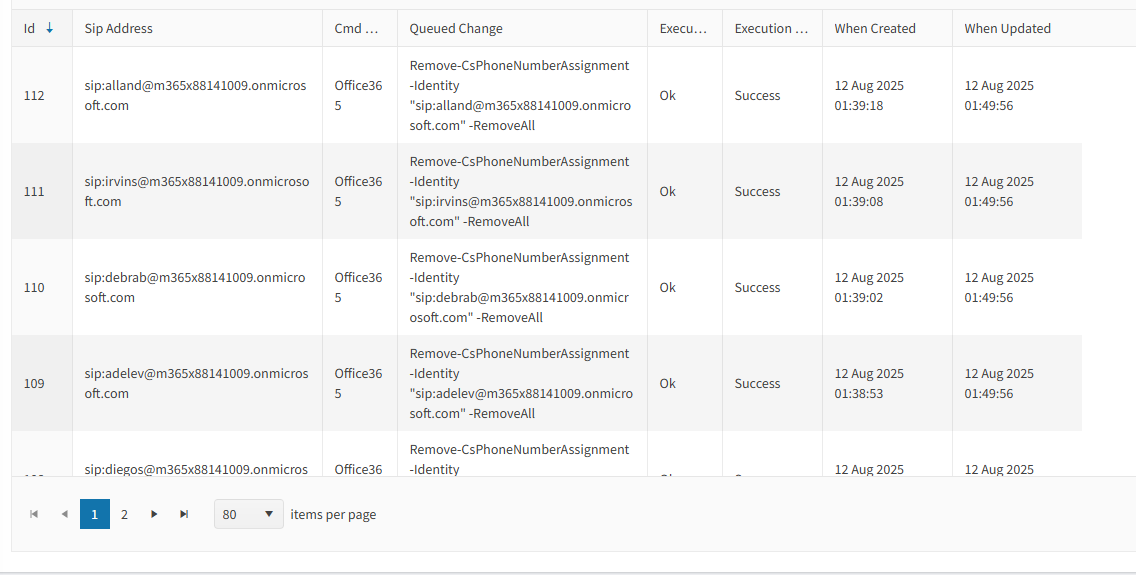
| ■ | 3 users counted as Managed Users-By User Interface. These users do not meet the Direct Routing conditions and are not members of a security group assigned to a LifeCycle Management template, but their M365 user properties were changed manually, for example, the user address, a Teams calling policy, or a phone number assignment. In the UMP Customer License - Audit pane, this factor is displayed as 3 (20): 20 users qualify for the factor, and 3 of them are counted under it, because the others are already counted under a higher-priority factor. |
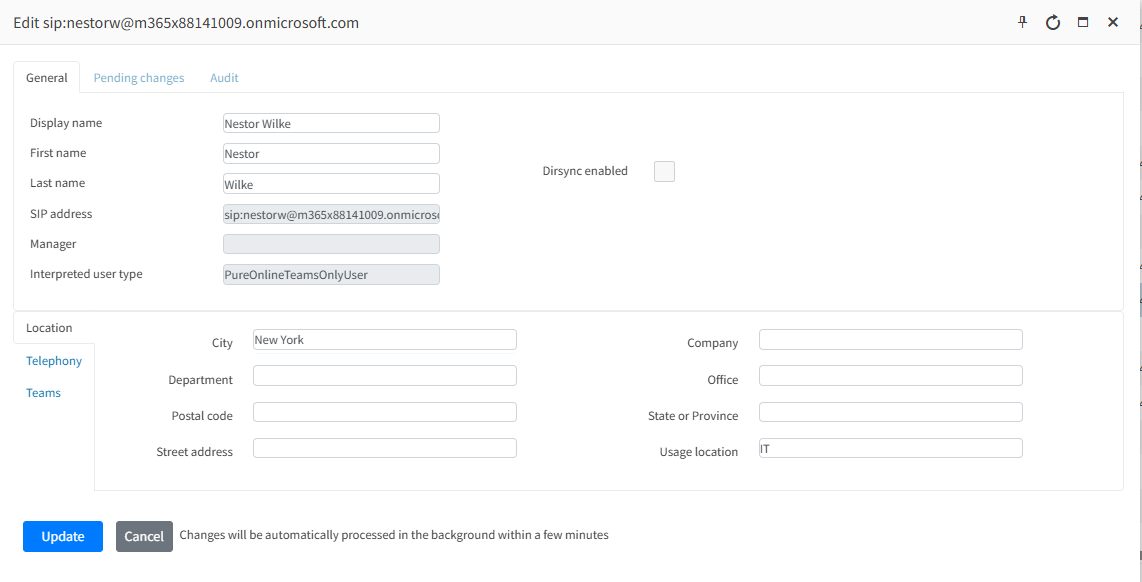
| ■ | 1 number counted as Managed Service Numbers: a number (for example, a fax number) that was loaded to the tenant in the SIP Connections page with a PSTN Gateway tag that is different from the tag of the configured SIP Connections. In the UMP Customer License - Audit pane, this factor is displayed as 1 (1). |
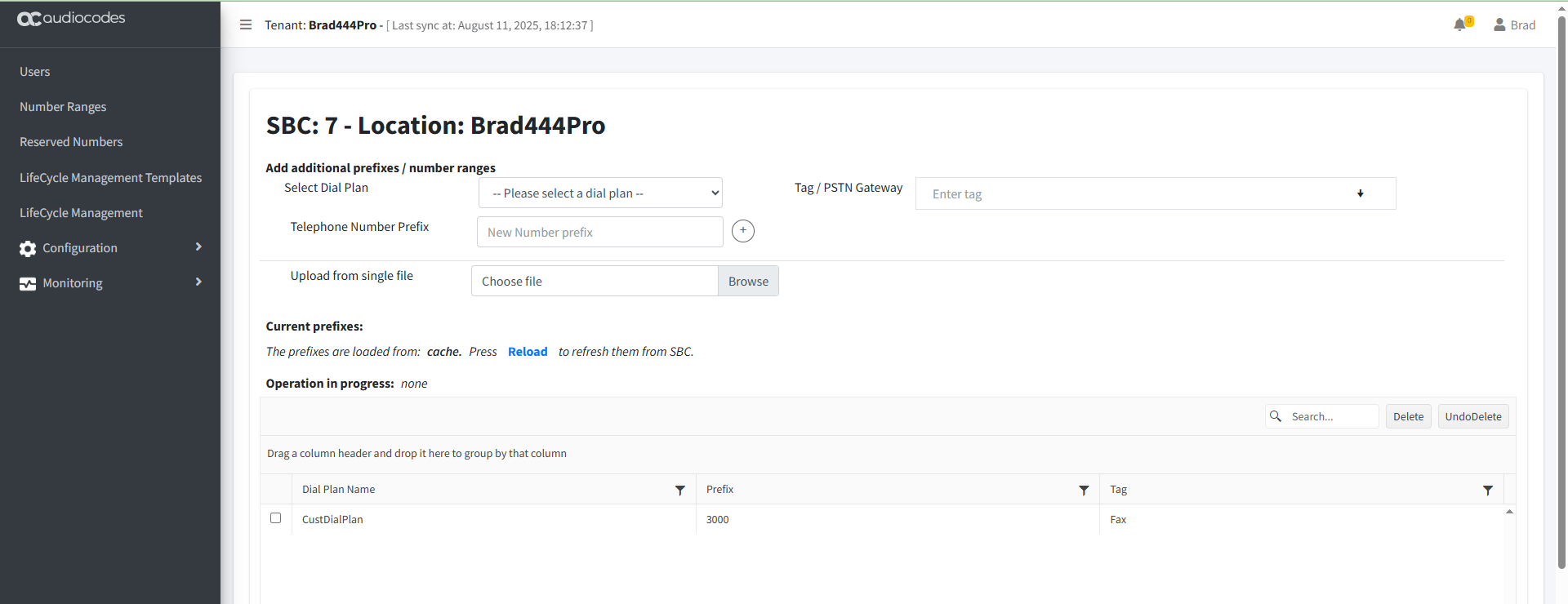
After further configuration changes, the license usage is updated as shown in the figure below.
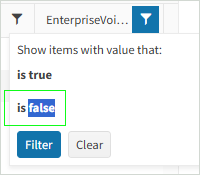
To verify the Managed Users-Direct Routing count, filter the Users page by Enterprise Voice Enabled set to is true.
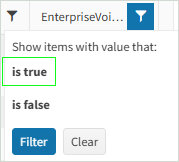
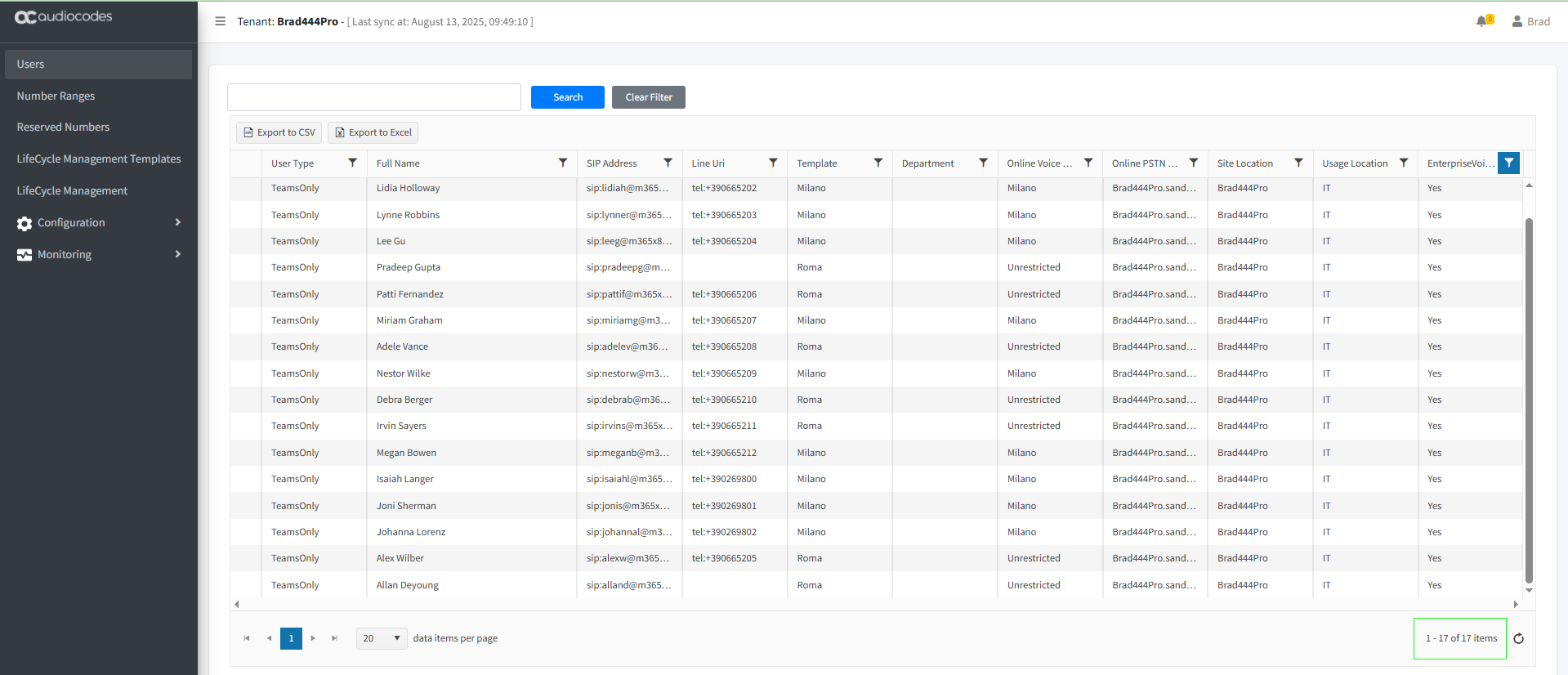
To view the remaining 3 monitored users, filter the Users page by Enterprise Voice Enabled set to is false.

The same data is also shown in the Service Details in the Live Platform Operation Center (see Services details quick glance).